15 Hair Color Ideas for Pixie Cuts With Personality
A pixie makes hair color compact and prominent, especially across the fringe and crown. These hair color ideas for pixie cuts show 15 ways to use solid shades, subtle dimension, and bold accents on adult women. Notice which sections are lightest: a bright top with darker sides gives a different outline from an even all-over shade. The best reference is close to how you actually wear your short layers.
Preview a new hair color on your photo ↗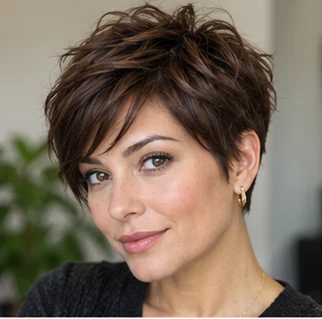
15 hair color ideas for pixie cuts in pictures
1. Chocolate brown pixie
A rich brown shade shows soft reflections across the textured crown. This is a restrained direction when you want the shape of the short cut to remain the main feature.
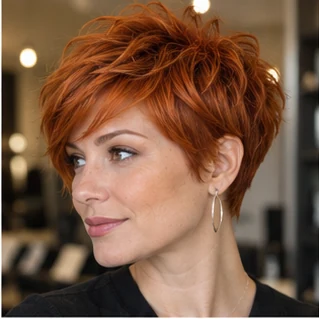
2. Copper pixie
Bright copper runs through the top and fringe of a cropped shape. The warm red is immediately visible close to the face, even without long lengths.
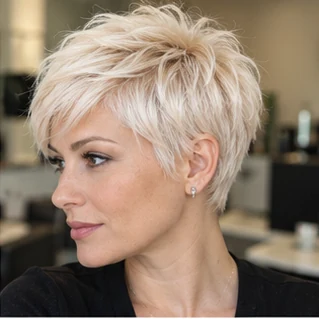
3. Platinum pixie
Very pale blonde makes the short shape luminous and distinct. Save it for the lightness, then discuss what that degree of blonde would involve on your own starting hair.
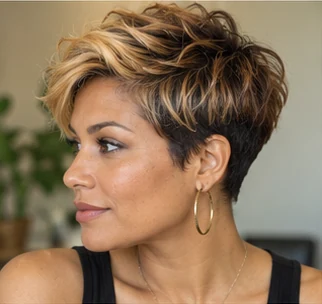
4. Honey blonde top
Golden top layers sit above deeper brown sides. This selective brightness emphasizes the crown rather than making the entire pixie equally blonde.
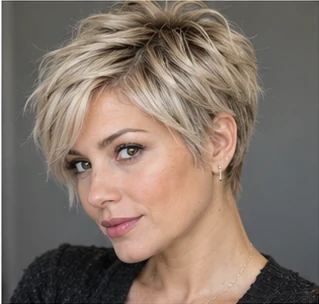
5. Ash blonde pixie
Cool light-blonde pieces define the short layers without golden warmth. Compare it with honey blonde to separate your preferred tone from the haircut you enjoy.
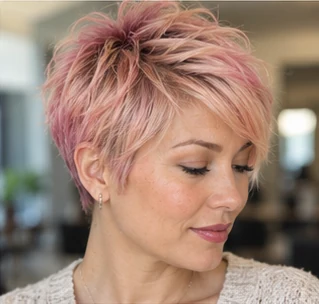
6. Rose gold pixie
A soft peach-pink shade gives the cropped top a warm pastel reflection. This is quieter than vivid pink while still making color a clear feature of the style.
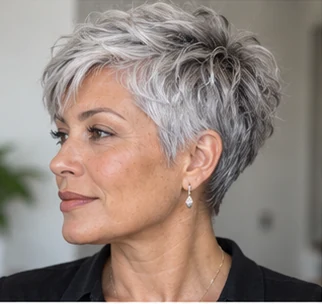
7. Silver gray pixie
Pale silver contrasts with deeper shadows between short layers. If your goal is blending natural gray, share your own pattern so the placement can be adapted.
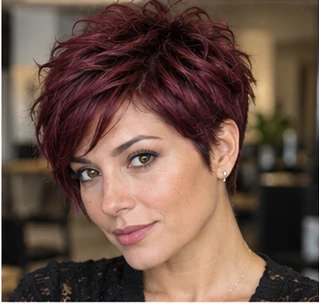
8. Burgundy pixie
A deep wine-red tone gives the compact cut a rich red-violet finish. The shade stays darker than the pastel examples while offering more visible color than a neutral brunette.
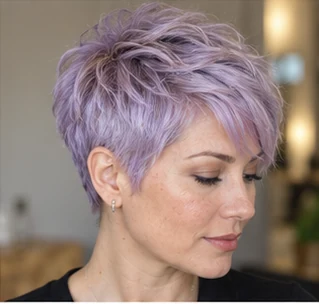
9. Lavender pixie
Soft pastel purple sits across the crown and fringe. The compact placement makes lavender prominent near the face, so compare a muted smoky version if you prefer less saturation.
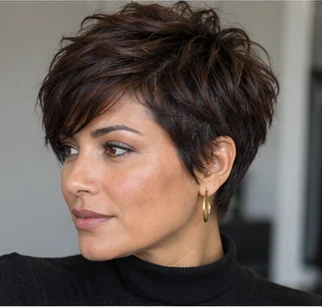
10. Espresso pixie
Very deep brown emphasizes the silhouette with subtle brown reflections. This is useful if you want strong depth without choosing a completely black-looking finish in every light.
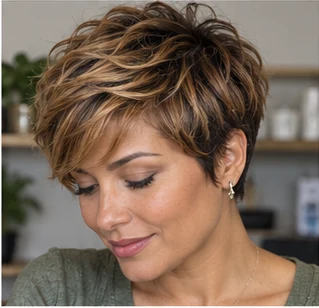
11. Caramel highlighted pixie
Fine warm pieces break up a brown top while the sides stay deeper. The small ribbons add separation without covering the entire crown in a lighter solid color.
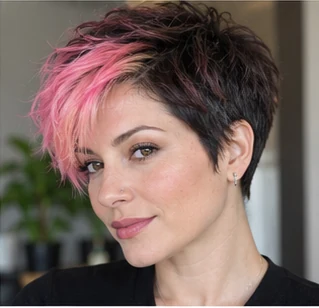
12. Pink accent fringe
A pink front section contrasts with a dark cropped base. This is a placement-led statement, with the fashion color concentrated at the fringe rather than spread equally throughout.
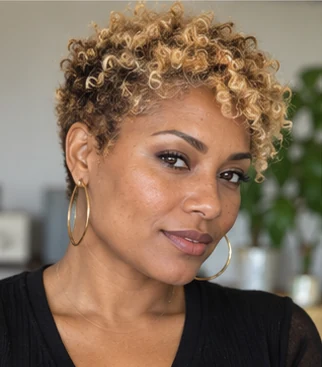
13. Natural coily blonde pixie
Warm blonde accents sit on a short coily crop over a deeper base. The texture supplies depth between the lighter coils and should guide a realistic placement discussion.
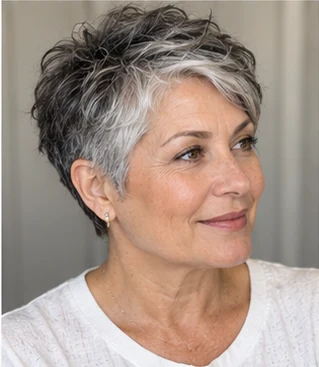
14. Mature salt and pepper pixie
Silver and darker strands share a short textured shape on a mature woman. Use it to compare contrast and silhouette, rather than assuming the same gray pattern can be copied exactly.
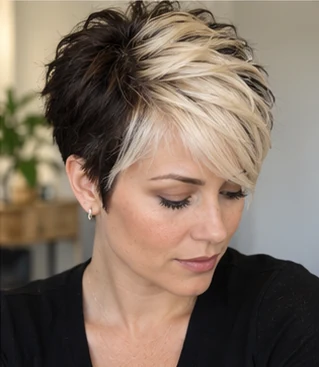
15. Split blonde brunette pixie
A pale blonde section sits beside a deep brunette section through the top and fringe. The compact two-color placement is intentionally bold, making the dividing line a key reference detail.
How to choose your favorite look
Choose whether you want to emphasize the top, fringe, or entire shape. Strong contrast across a small area can look bold, while nearby shades create softer texture. Compare the color on a smooth pixie with a textured one if your styling varies.
What to discuss with your colorist
Show where the brightness should sit and how short you intend to keep the sides. Discuss the timing of cuts and color together, since trimming changes the visible placement. A pixie reference can inspire color even if you keep a different haircut in the tool.
Think about upkeep before you decide
Short hair still has visible regrowth, and regular cuts can remove highlighted pieces quickly. Ask how your preferred placement fits the maintenance routine you already follow rather than choosing a color plan in isolation.
A few more ideas for your board
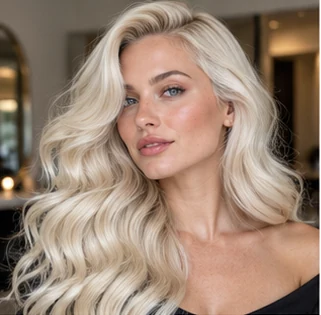
15 Platinum Blonde Hair Color Ideas From Pearl to Icy
Platinum blonde is defined by very pale lightness, but its finish can still vary from creamy pearl to cool silver.
Find your favorite ↗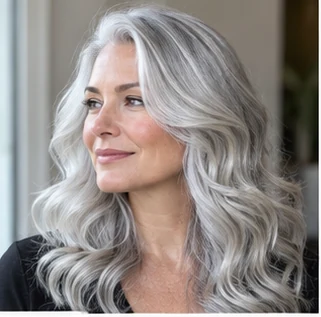
15 Silver Gray Hair Color Ideas With Soft Dimension
Silver gray hair color ideas include intentionally colored metallic shades as well as looks inspired by natural silver.
Find your favorite ↗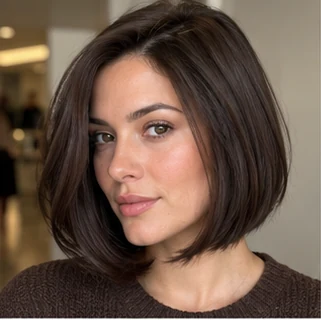
15 Hair Color Ideas for Bob Haircuts: Subtle to Bold
A bob puts color close to the face and concentrates it into a clear outline.
Find your favorite ↗