15 Low Maintenance Hair Color Ideas for Brunettes
Low maintenance means different things depending on your natural shade, gray regrowth, haircut, and tolerance for fading. These low maintenance hair color ideas for brunettes focus on visual choices that keep depth or soften a transition, rather than promising a fixed number of weeks between appointments. Compare 15 rooted, tonal, and selectively highlighted looks to find a direction that works with the color you already have.
Preview a new hair color on your photo ↗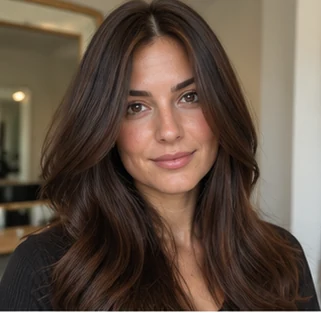
15 low maintenance hair color ideas for brunettes in pictures
1. Natural depth chocolate
Chocolate brown stays close in depth from roots to ends, with gentle reflected dimension. This can be a useful direction when it is near your natural shade, rather than automatically low upkeep for every brunette.
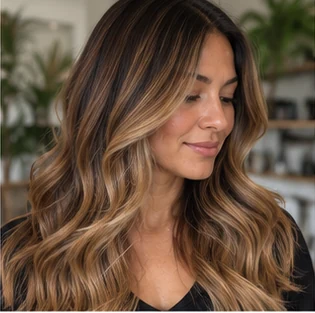
2. Soft caramel balayage
Warm caramel brightness sits mainly through the lengths while the root stays deeper. The placement softens the starting point of the highlights, though the lighter sections can still need refreshes.
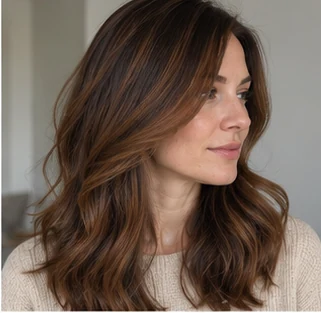
3. Subtle chestnut ribbons
Fine chestnut pieces sit only a little lighter than the brunette base. The close contrast is useful if your main goal is gentle movement rather than a bright blonde transformation.
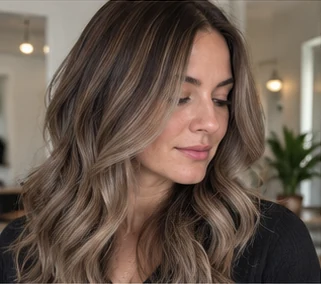
4. Rooted mushroom brunette
Muted taupe-brown lengths meet a deeper root through a soft transition. Save this for a less sharply outlined grow-out, while discussing how the cool tone would be maintained on your starting hair.
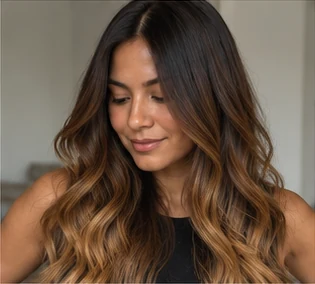
5. Brunette with toffee ends
The warmest brightness gathers near the tips instead of the scalp. Consider your trim schedule, since end-focused color can disappear more quickly when you regularly shorten the lengths.
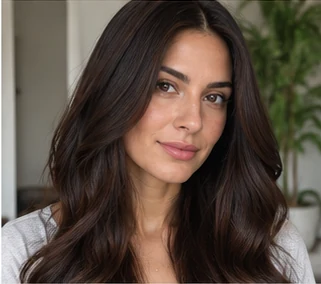
6. Dark espresso brunette
A deep, near-solid brown creates a simple color direction. Its upkeep depends on your natural roots; it may show lighter or silver regrowth clearly even when the lengths require little adjustment.
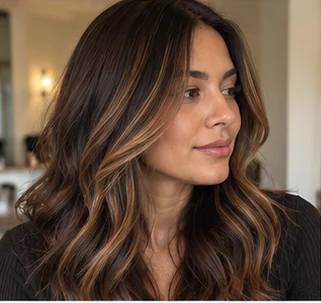
7. Fine face-framing caramel
Only a few narrow front pieces are lighter than the brown base. This limits the area of brightness, but the location near the face can still make regrowth noticeable.
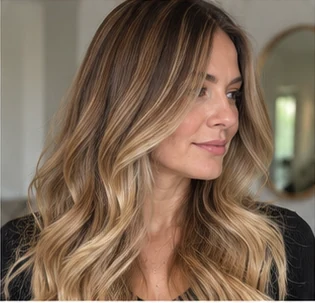
8. Soft bronde root blend
Brown roots fade gradually into a few neutral blonde ribbons. The visual softness at the top is the main reference detail, distinct from a promise that the blonde will never need tonal care.
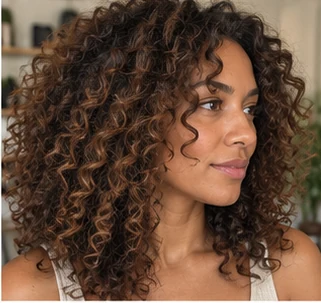
9. Curly brunette dimension
Warm brown accents follow selected curls without a large light-dark jump. This is a texture-focused way to add variation while retaining most of the original-looking depth.
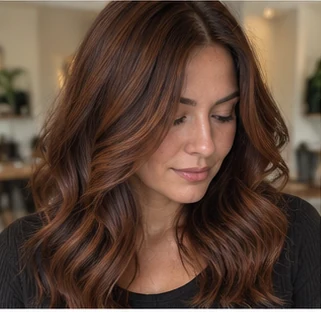
10. Cinnamon brunette reflection
A restrained cinnamon reflection warms a brown base without strong separate highlights. Save it if a tonal shift appeals more than a placement-heavy color change.
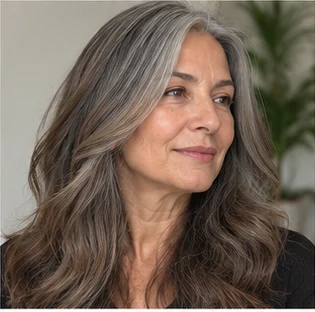
11. Natural gray blended brunette
Fine lighter strands sit through a brown base on a mature woman. A realistic version must follow your actual gray distribution, so bring a clear photo of your current roots.
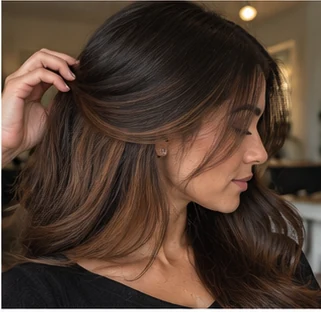
12. Peekaboo toffee underlayer
A close-toned warm underlayer sits beneath a darker brown surface. The hidden placement can make the change quieter when worn down, while becoming more visible in an updo.
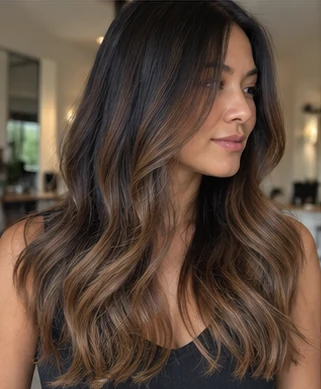
13. Brown ombre with soft contrast
The ends become only slightly lighter than the roots. This creates a gentle gradient rather than a conspicuous dark-to-blonde change and is useful if you enjoy subtle variation.
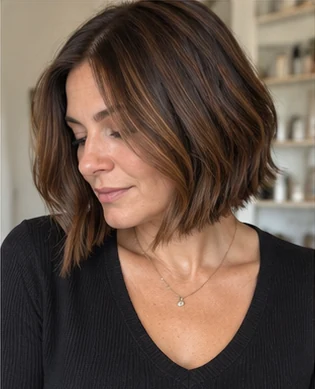
14. Brunette bob with tonal highlights
Fine brown highlights separate a short bob without a bold blonde edge. Discuss how future trims will change the placement so the color plan fits your regular haircut routine.
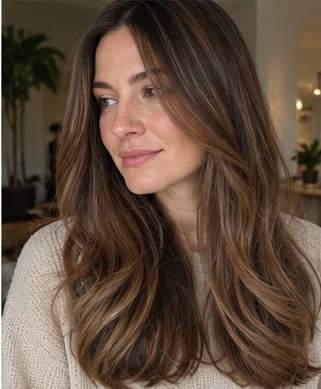
15. Warm neutral brunette layers
Soft neutral-brown variation follows long layers close to the base shade. Save this when you want a natural-looking overall impression, then assess upkeep against your own root color.
How to choose your favorite look
Start with your natural roots. A shade close to them may give a gentler visible transition than a dramatic contrast, but silver regrowth changes that equation. Decide whether your priority is fewer lightened sections, a softer root line, or a color you enjoy as it fades.
What to discuss with your colorist
Tell your colorist how often you realistically want to book visits, then ask which reference fits that routine on your hair. Share your natural root color and any gray pattern. Low maintenance is a personalized plan, not a property guaranteed by a shade name.
Think about upkeep before you decide
Root contrast, tone, and hair condition are separate concerns. A soft root blend may still need tonal refreshes through the lengths. Choose a plan whose grow-out you like, and ask how trims will affect any end-focused color.
A few more ideas for your board
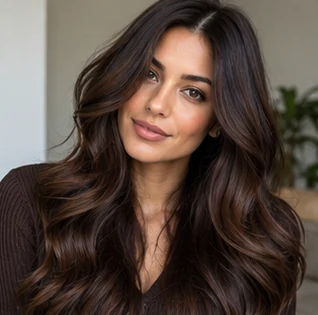
15 Chocolate Brown Hair Color Ideas to Save
Chocolate brown is a family of brunette shades rather than one fixed color.
Find your favorite ↗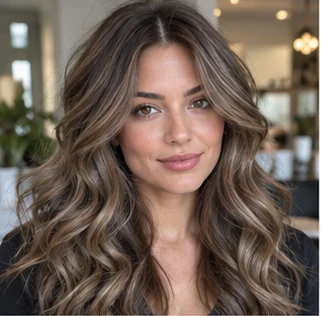
15 Mushroom Brown Hair Color Ideas With Dimension
Mushroom brown sits in a softly muted space between brunette, taupe, and beige.
Find your favorite ↗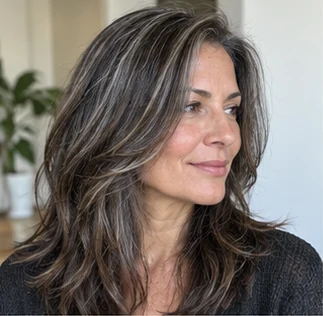
15 Gray Blending Hair Color Ideas for a Softer Transition
Gray blending aims to work with the contrast between natural silver and the rest of the hair, rather than simply choosing an all-over gray dye.
Find your favorite ↗