15 Gray Blending Hair Color Ideas for a Softer Transition
Gray blending aims to work with the contrast between natural silver and the rest of the hair, rather than simply choosing an all-over gray dye. These gray blending hair color ideas show 15 visual directions using varied depths, lighter face frames, highlights, and lowlights. The right placement depends on where your own gray grows. Use the images to describe the contrast you like, then start the salon discussion with a current photo of your roots.
Preview a new hair color on your photo ↗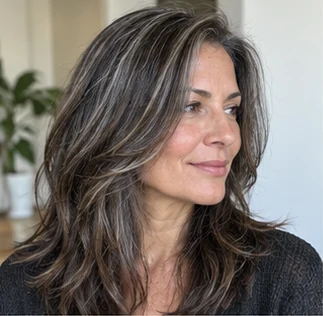
15 gray blending hair color ideas in pictures
1. Salt and pepper brunette
Fine silver strands sit among deeper brown lengths on a mature woman. The contrast remains visible rather than aiming for full gray coverage, making this a useful natural-pattern reference.
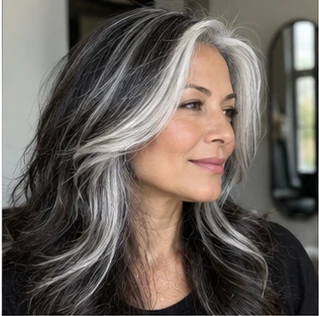
2. Silver face frame
The brightest silver is concentrated around the hairline while the back stays deeper. This can be a useful direction to discuss if your own gray is strongest near the front.
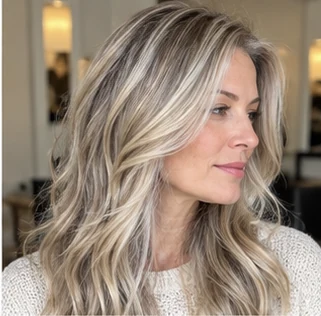
3. Ash blonde gray blend
Cool blonde highlights sit alongside silver strands and a deeper root. The blend moves the overall impression lighter without making every section the same pale shade.
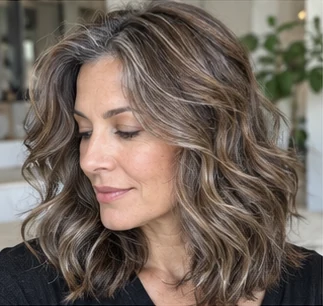
4. Mushroom brown gray blend
Muted taupe-brown dimension overlaps with lighter gray strands. This is a softer brunette palette than a high-contrast silver-and-black result, but the placement still needs to follow your natural pattern.
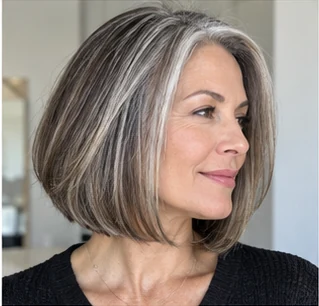
5. Gray blended bob
Silver and medium-brown strands share a gently curved bob. The short outline makes the contrast easy to see and offers a practical reference if you are also considering removing older colored ends.
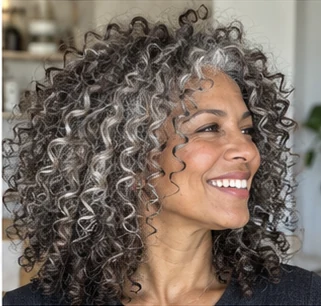
6. Gray blending on curls
Lighter silver curls appear among deeper natural curls. Use a texture-matched photo to discuss the finished balance when the hair is dry rather than stretched straight.
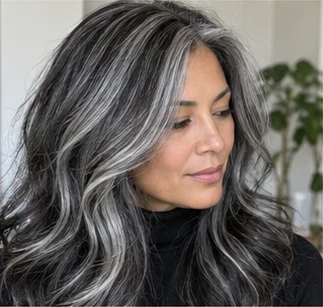
7. Charcoal and silver blend
Deep charcoal sections sit between brighter silver strands. This keeps deliberate depth in the result instead of moving toward an almost uniformly pale gray.
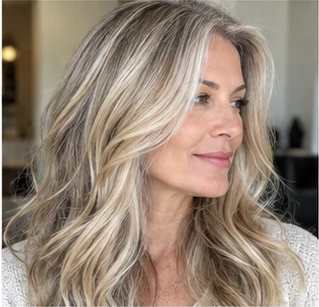
8. Beige blonde gray blend
Soft beige blonde connects pale strands with slightly deeper sections. Compare this with an ashier example if you prefer a neutral finish rather than a distinctly cool silver look.
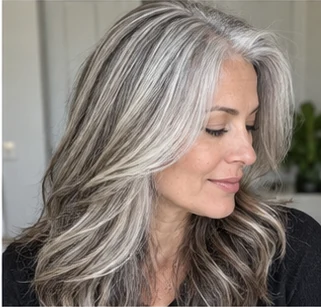
9. Gray blend with lowlights
Fine darker strands interrupt a lighter silver base. This is a visual reference for adding depth, with the actual shade and placement adapted to your current silver distribution.
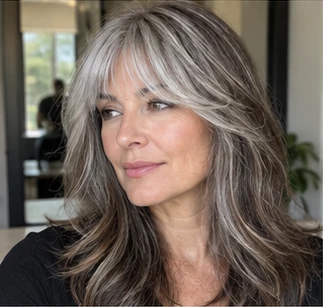
10. Silver curtain fringe
A lighter fringe blends into deeper gray-brown layers. Save this if the front naturally grows lighter and you want to discuss keeping that brightness visible.
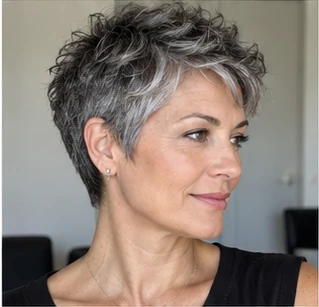
11. Gray blended pixie
Silver and dark strands share a compact textured crop. If cutting out older color is part of your plan, discuss the length you are comfortable keeping rather than treating a pixie as necessary.
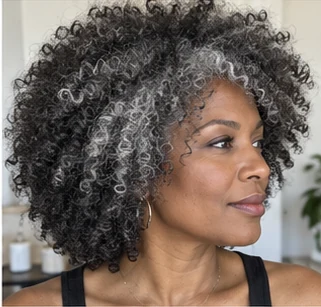
12. Gray blending on coils
Silver strands sit through a naturally coily shape with deeper interior sections. The texture and natural regrowth pattern should guide how any colored pieces are placed.
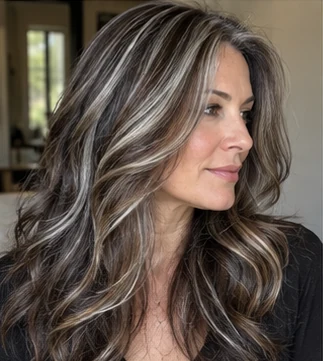
13. Brunette silver ribbons
Visible silver ribbons run through a brown base without making it mostly blonde. This is a higher-contrast interpretation, useful if you enjoy seeing clear individual light sections.
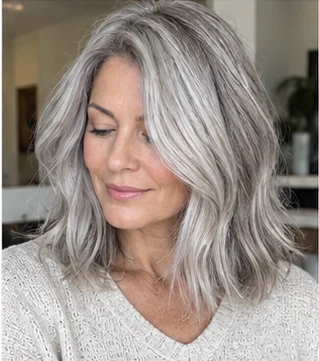
14. Soft silver lob
A shoulder-length style is mostly light silver with a few deeper strands. This represents a lighter end goal, not a promise that darker dyed lengths can reach it in one visit.
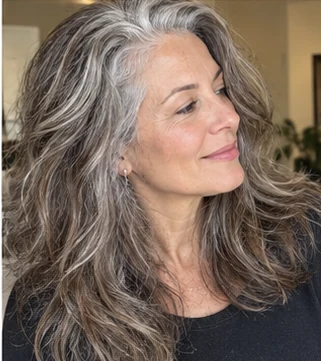
15. Natural gray grow-out blend
A mature woman wears silver roots connected to mixed brown-gray lengths through a soft transition. Use it to discuss the appearance of an in-between stage as well as the eventual target.
How to choose your favorite look
Notice whether you prefer a predominantly silver result, a brunette with lighter strands, or a blonde-silver blend. Your natural pattern may be concentrated at the front, scattered through the crown, or more widespread. A useful target respects that starting point instead of assuming every example is equally easy to recreate.
What to discuss with your colorist
Bring clear daylight photos of your current root area and explain how much natural gray you want to keep visible. Share any older dye through the lengths. Ask about the transition process and what the grow-out could look like between appointments, rather than expecting an instant copy of a reference.
Think about upkeep before you decide
Natural silver and previously colored sections may look different as they grow and fade. Discuss a plan for the transition as well as the final look. Avoid treating gray blending as guaranteed full coverage or a maintenance-free result.
Professional background: Wella’s professional guide to transitioning to gray.
A few more ideas for your board
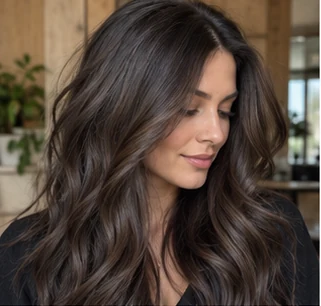
15 Ash Brown Hair Color Ideas: Soft to Smoky
Ash brown hair color ideas range from a softly muted brunette to a noticeably smoky finish.
Find your favorite ↗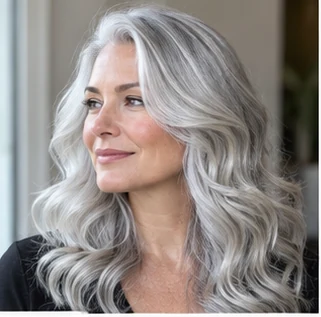
15 Silver Gray Hair Color Ideas With Soft Dimension
Silver gray hair color ideas include intentionally colored metallic shades as well as looks inspired by natural silver.
Find your favorite ↗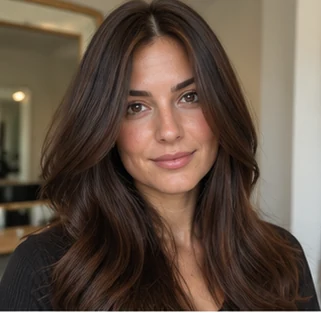
15 Low Maintenance Hair Color Ideas for Brunettes
Low maintenance means different things depending on your natural shade, gray regrowth, haircut, and tolerance for fading.
Find your favorite ↗