15 Blonde Balayage on Dark Hair Ideas to Compare
Blonde balayage on dark hair is a contrast-led look, but the contrast can be soft or dramatic. These 15 examples compare thin ribbons, bright ends, face-framing sections, and warmer or cooler blonde tones. Notice the transition between dark and light rather than looking only at the brightest part. On genuinely dark starting hair, the route to a pale blonde also deserves a separate conversation with your colorist.
Preview a new hair color on your photo ↗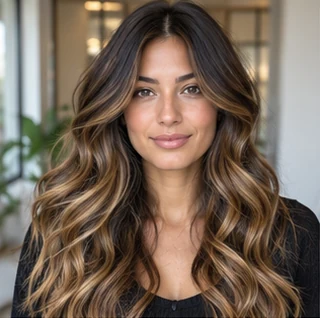
15 blonde balayage on dark hair in pictures
1. Caramel blonde balayage
Warm caramel-blonde ribbons soften a dark brunette base. This creates visible contrast without the pale icy finish of the brightest blonde examples.
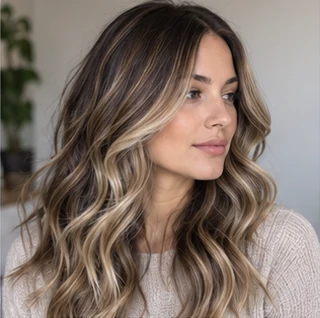
2. Beige blonde ribbons
Neutral beige sections sit across deep brown waves. Save this if you prefer restrained warmth while still wanting the blonde to stand apart from the darker foundation.
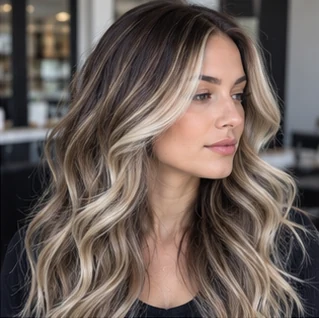
3. Ash blonde contrast
Cool pale ribbons create a stronger light-dark separation. Choose this for the contrast as well as the tone, and discuss the lightening involved on your current hair.
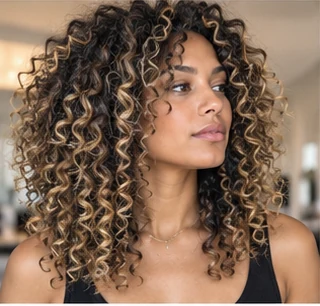
4. Blonde balayage curls
Blonde follows selected natural curl groupings over a dark base. The placement is most useful when viewed in the finished curl shape, not only while the hair is straight.
5. Blonde balayage bob
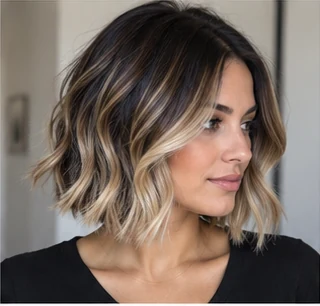
A short dark bob has blonde surface pieces and lighter ends. The shortened length makes the contrast especially visible around the outline, even with fewer highlighted sections.
6. Bright blonde face frame
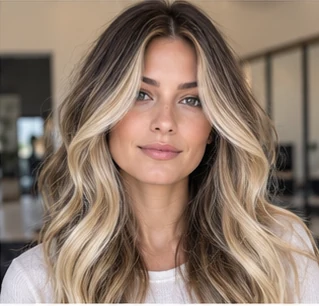
Paler sections beside the face connect to lighter lengths behind them. This is a bolder front placement than keeping the face frame dark and concentrating blonde at the back.
7. Rooted blonde melt
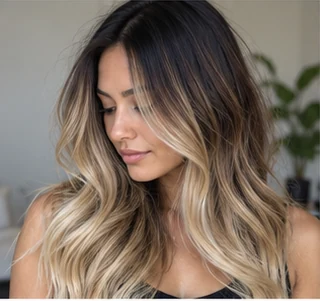
The top stays dark before a gradual transition into blonde. Save the length of that transition if you want more than a narrow root shadow.
8. Blonde balayage straight hair
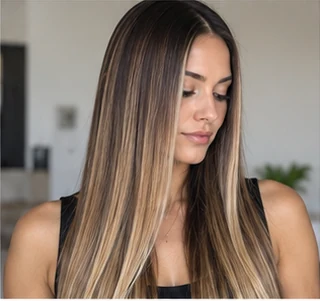
Smooth dark lengths reveal each lighter ribbon and the blending between them. This is useful if you usually wear your hair straight and want an honest placement reference.
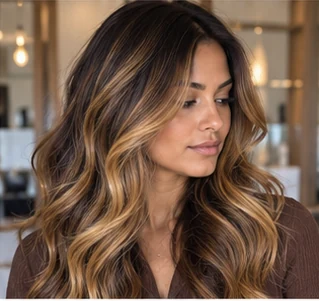
9. Honey blonde on dark brown
Golden honey highlights make a warm contrast against deep brown. Compare this with beige and ash examples to decide how much warmth belongs in your target result.
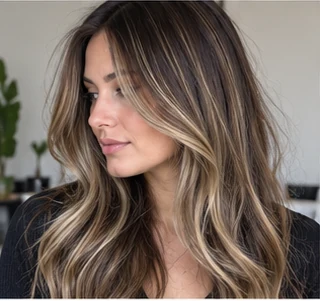
10. Fine blonde balayage
Slender blonde pieces leave plenty of dark hair between them. The restrained coverage keeps the look brunette overall rather than allowing the blonde to dominate the whole surface.
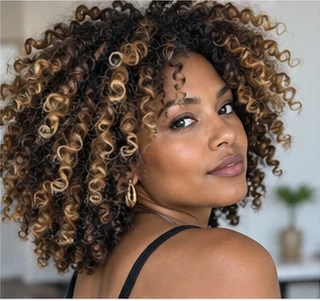
11. Blonde balayage coils
Selected coils show bright warm-blonde accents against dark interior sections. Save this for the amount of contrast, then adapt the specific placement to your own texture.
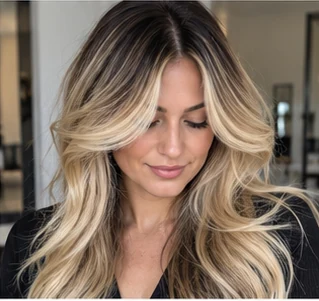
12. Blonde balayage curtain layers
The fringe and front layers carry brighter blonde while the roots stay dark. This connects the face frame to the lengths without making every section pale.
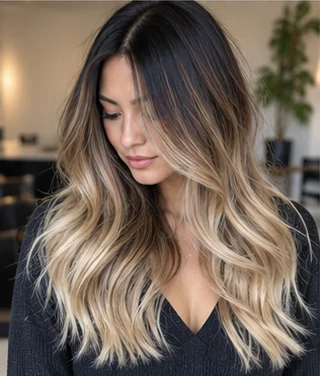
13. Champagne blonde ends
A dark top transitions toward creamy champagne-blonde lower lengths. The brightness is concentrated near the ends, giving a different effect from highlights that begin much higher.
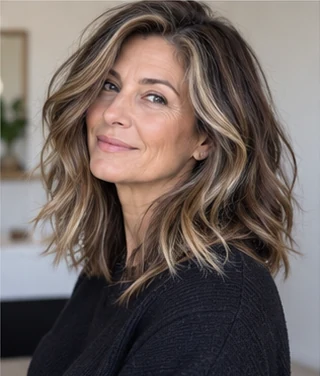
14. Mature dimensional balayage
A softly waved dark lob carries neutral blonde ribbons on a mature woman. If gray blending is part of your goal, show your actual regrowth pattern alongside this color reference.
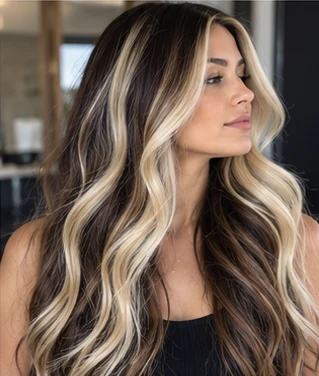
15. High contrast blonde panels
Broad pale sections stand out clearly against deep brown. This is a deliberate statement look; choose finer ribbons if you want the same blonde family with a less graphic result.
How to choose your favorite look
Choose how much darkness you want to preserve around the face and through the lengths. Then decide whether the blonde should be caramel, beige, or ash. A dramatic pale ribbon and a muted warm highlight can use similar placement while creating very different results.
What to discuss with your colorist
Bring your full color history, particularly any dark permanent dye. Ask what brightness is realistic for your starting hair and condition, and whether your target requires stages. The lightness of an AI example is not a promise about a single salon appointment.
Think about upkeep before you decide
The lightened sections and dark base may need different refresh plans. Discuss both, especially if you want to keep a cool blonde against a very deep root. A blurred transition does not remove the upkeep of the blonde itself.
Professional background: Wella’s high-contrast balayage guide.
A few more ideas for your board
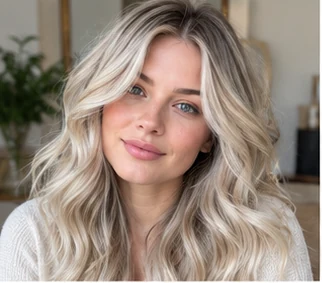
15 Ash Blonde Hair Color Ideas From Soft to Icy
Ash blonde hair color ideas vary from a gently cool beige to a much brighter silvery blonde.
Find your favorite ↗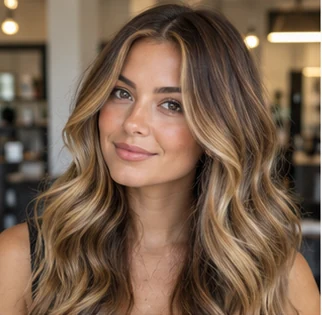
15 Bronde Balayage Ideas Between Brown and Blonde
Bronde sits between brown and blonde, and balayage adds variation in where the lighter pieces appear.
Find your favorite ↗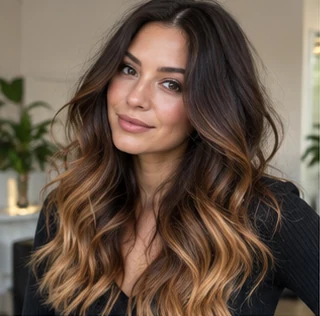
15 Ombre Hair Color Ideas From Subtle to Statement
Ombre focuses on a transition from one color area to another, usually from a deeper top into lighter or more vivid ends.
Find your favorite ↗