15 Bronde Balayage Ideas Between Brown and Blonde
Bronde sits between brown and blonde, and balayage adds variation in where the lighter pieces appear. These bronde balayage ideas show 15 ways to keep brunette depth while adding blonde brightness. Some lean caramel and warm; others are beige or softly cool. Look at how much dark hair remains around the part and underneath, because that balance often matters more than the lightest highlighted strand.
Preview a new hair color on your photo ↗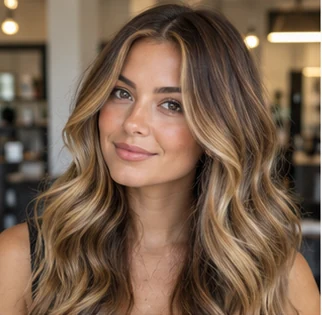
15 bronde balayage ideas in pictures
1. Classic warm bronde
Warm blonde ribbons sit through a medium brown base. The brown remains clearly visible, making this a balanced starting reference for bronde rather than a mostly blonde transformation.
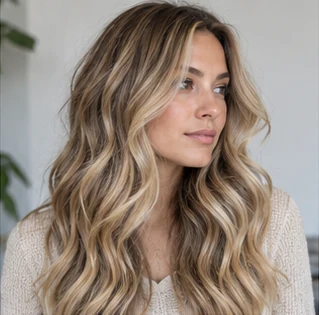
2. Beige bronde waves
Muted beige pieces replace a stronger caramel tone through long waves. Save this if you want a softer neutral balance while keeping the depth of a brunette foundation.
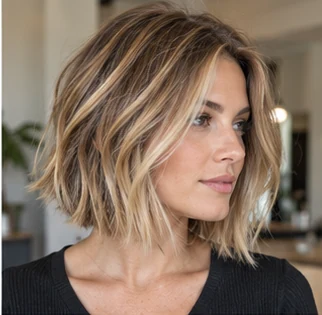
3. Bronde balayage bob
A short bob carries brighter blonde through the surface and ends. Because the hair is shorter, the highlighted sections occupy a large share of the visible shape and can noticeably shift the overall color.
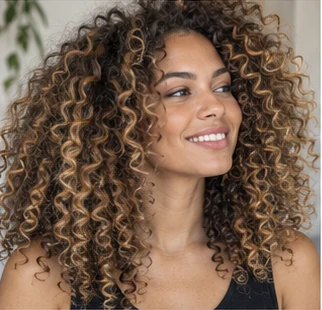
4. Bronde natural curls
Warm blonde follows selected curl groupings over a deeper brown base. This reference helps show how much definition you want once the curls sit naturally rather than being stretched or straightened.
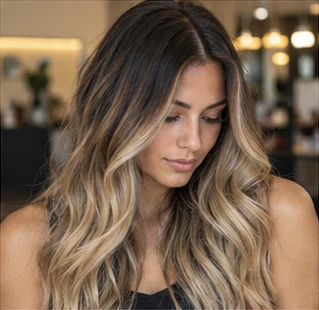
5. Dark rooted bronde
A pronounced dark root transitions into lighter brown-blonde lengths. The retained depth is intentional, useful if you want a stronger contrast around the part than a softly highlighted brunette offers.
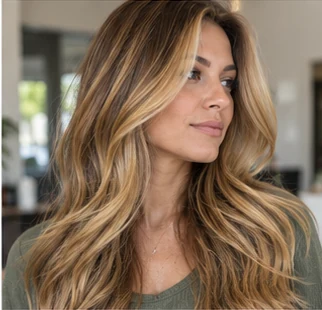
6. Honey bronde layers
Golden honey pieces brighten long brown layers. This leans warmer than beige bronde and is worth comparing directly if you are deciding between neutral and golden blonde reflections.
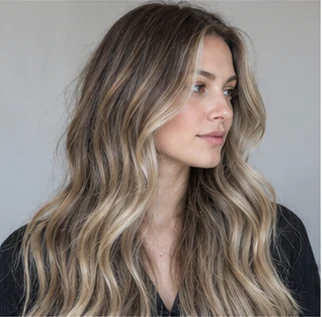
7. Ash bronde balayage
Cooler blonde ribbons sit against muted brown. Choose it for the restrained warmth as well as the placement, since the same highlight pattern in caramel would create a different impression.
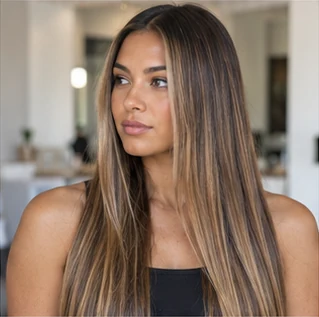
8. Bronde straight lengths
Straight hair reveals how the lighter sections blend with the brown underneath. This is a practical reference if you want to judge the result without waves adding extra dimension.
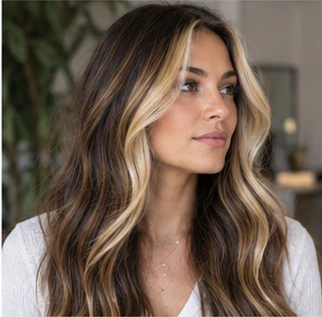
9. Bronde face frame
The brightest blonde is placed beside the face while the back remains deeper. This can make the change feel more obvious in portraits than a similar amount of brightness hidden lower down.
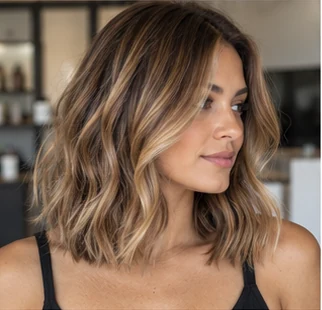
10. Caramel bronde lob
A shoulder-length lob uses caramel-blonde pieces over warm brown. The depth of the base keeps the result bronde rather than uniformly golden blonde.
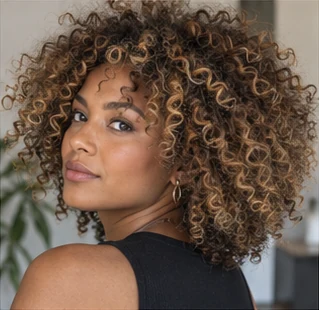
11. Bronde coily shape
Selected coils carry warm blonde accents while the interior stays brown. Save this for its ratio of light to dark, adapting the placement to your own coil pattern with a colorist.
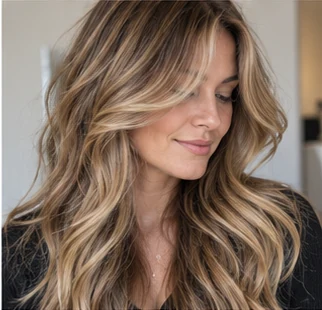
12. Bronde curtain layers
Lighter front sections connect a curtain fringe to brown-blonde lengths. The connection makes the color feel continuous rather than leaving an isolated bright fringe.
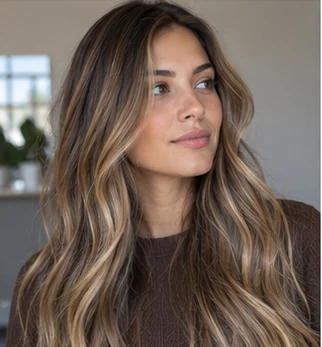
13. Soft contrast bronde
Fine highlights stay close to the brown base, creating gentle variation. This is a quieter option when your goal is movement and brightness without strongly separated blonde ribbons.
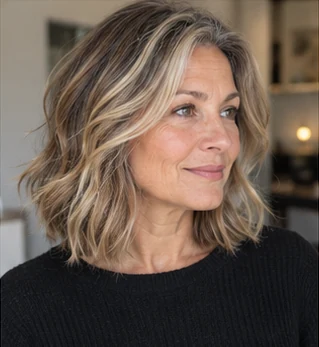
14. Mature bronde lob
A softly waved lob blends brown depth with neutral blonde pieces on a mature woman. Discuss any silver regrowth separately if you want the placement to help with gray blending.
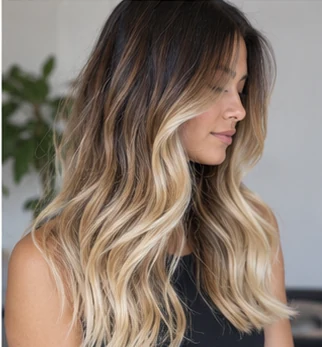
15. Bright ended bronde
The lower lengths become noticeably blonder while the top stays brown. This emphasizes an end-focused transition, distinct from evenly distributed blonde highlights through the whole surface.
How to choose your favorite look
Decide whether you want to look mostly brunette or mostly blonde overall. A few bright ends can still leave the result firmly brown, while more surface highlights move it toward blonde. Choose the warmth separately from that balance.
What to discuss with your colorist
Show your colorist the amount of brown you want to retain and the level of brightness you like through the front. Balayage describes a placement approach rather than one exact shade, so bring a tonal reference too. Discuss how the blend would look in your usual hairstyle.
Think about upkeep before you decide
A softer root transition may reduce the visual contrast of regrowth, but the lighter sections can still change tone. Plan root blending and blonde refreshes as separate choices rather than assuming balayage removes maintenance.
Professional background: Wella’s high-contrast balayage guide.
A few more ideas for your board
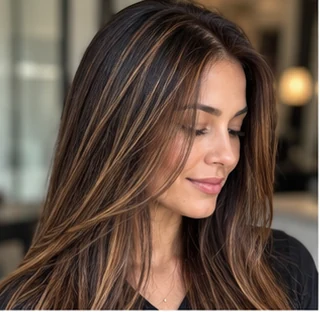
15 Caramel Highlights on Brown Hair Ideas
Caramel highlights on brown hair can be barely-there golden threads or bold ribbons through a dark base.
Find your favorite ↗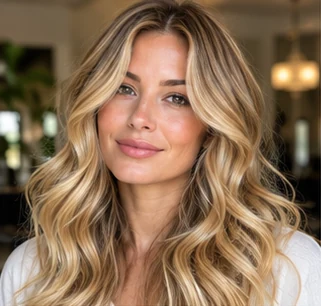
15 Honey Blonde Hair Color Ideas With Warm Dimension
Honey blonde combines golden brightness with enough depth to avoid an icy finish.
Find your favorite ↗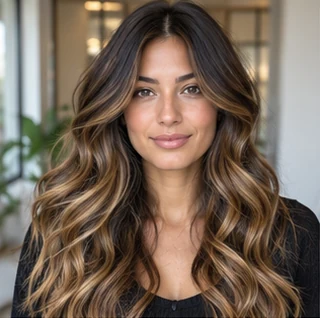
15 Blonde Balayage on Dark Hair Ideas to Compare
Blonde balayage on dark hair is a contrast-led look, but the contrast can be soft or dramatic.
Find your favorite ↗